Learning Outcomes
i. Define genetics and understand its role in biology.
ii. Comprehend how heredity works and how it is a central concept in genetics.
iii. Recognize the basic mechanisms by which traits are passed from parents to offspring.
i. Defining Genetics
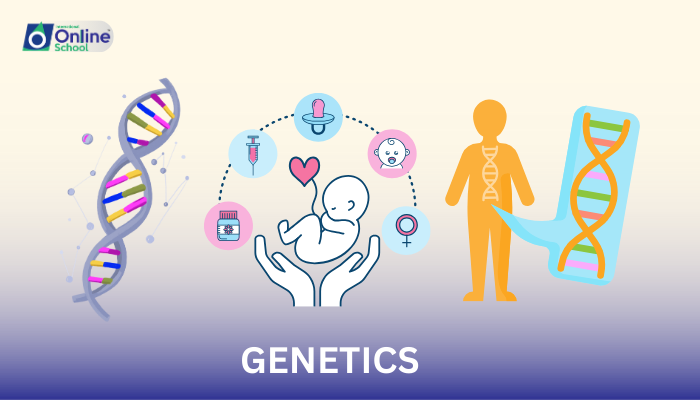
Genetics is the branch of biology that studies genes, heredity, and the variation of organisms. Genes, the basic units of heredity, are specific sequences of DNA that code for the transmission of traits from parents to their offspring. Genetics plays a crucial role in understanding how these traits are inherited and how they contribute to the unique features of each organism.
ii. The Role of Genetics in Understanding Heredity
Heredity is the process by which parents pass traits to their offspring. Genetics provides the scientific framework that explains how this transfer of traits occurs. It allows us to predict the likelihood of an offspring inheriting a particular trait, understand genetic disorders, and even explore the possibilities of genetic enhancements and therapy.
iii. Basics of Trait Inheritance
Traits are inherited through genes that come in pairs, with one member of each pair inherited from each parent. The variations of these genes, known as alleles, can be dominant or recessive. A dominant allele will express its trait even if only one copy is present, while a recessive allele will only express its trait if both copies are the recessive allele.
In sexual reproduction, each parent contributes one set of chromosomes to the offspring, and thus one allele for each gene. The combination of alleles determines the offspring's traits. For example, in pea plants, the allele for purple flowers is dominant over the allele for white flowers. Therefore, a plant with at least one allele for purple flowers will have purple flowers.
iv. Significance of Genetics in Biology
Genetics is fundamental in biology because it explains the diversity of life and the mechanisms of evolutionary change. It helps us understand the genetic basis of life, the causes of genetic diseases, and the methods by which traits are transmitted across generations. With the advent of genetic engineering and biotechnology, genetics also opens the door to modifying organisms for specific purposes, such as disease resistance in crops or the study of diseases in model organisms.
Understanding genetics is therefore essential not only for understanding life at the molecular level but also for applications in medicine, agriculture, and biotechnology. It sheds light on the continuity of life and the intricate processes that contribute to the vast diversity we observe in the natural world.
